Private Label Guide · 6 min read · Published 2026-11-16
How Private-Label Bottled Water Manufacturing Works
An end-to-end breakdown of how Indian entrepreneurs, retail chains, and hospitality groups partner with a private-label manufacturer to produce drinking water under their own brand.
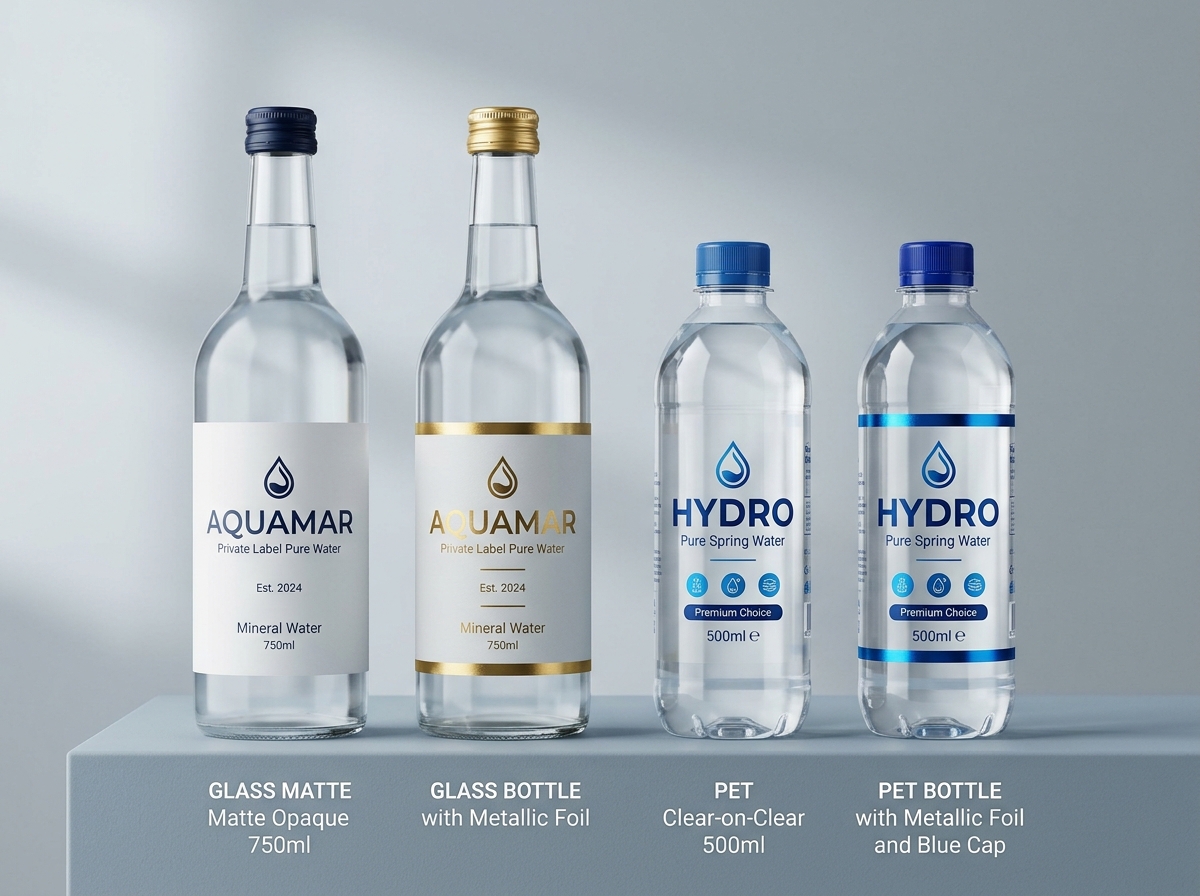
What Private-Label Manufacturing Actually Means
In private-label bottled water manufacturing, the brand owner controls the brand name, visual identity, market positioning, and customer relationships, while an external manufacturer handles bottling, sealing, custom labelling, and secondary case packing.
This model eliminates the heavy capital expenditure, land acquisition, plant engineering, and ongoing factory staffing required to build an independent bottling plant—allowing businesses to validate distribution and scale responsibly.
Stage 1: Commercial Scope and Bottle Format Selection
Every private-label launch starts by defining the target buyer. A brand supplying cafes, fine dining, and luxury hotels may anchor its range in clear glass bottles, whereas a brand targeting corporate campuses, travel hubs, or regional retail generally starts with commercial PET bottles.
Confirming available capacities, minimum order quantities (MOQs), and per-unit freight economics early prevents unrealistic margin assumptions.
Stage 2: Regulatory Attribution and Artwork Approval
Under Indian food safety regulations, packaged drinking water labels must clearly display the brand/marketer details alongside the licensed manufacturer’s attribution, FSSAI licence number(s), net volume, and batch/best-before markings. Brand owners should confirm their own required FSSAI marketer or brand-owner registration with a compliance advisor prior to printing labels.
Stage 3: Batch Production, Packaging, and Replenishment
Once artwork proofs and commercial terms are approved, the manufacturer schedules filling, tamper-evident sealing, custom label application, and transit carton packing. After the inaugural launch batch, recurring replenishment runs follow a predictable reorder cadence tied to your inventory turnover.